Table of Contents
TogglePizza night doesn’t have to end at the table. That half-eaten pie sitting on the counter is still good eating, if you handle it right. Whether you’re planning leftovers or didn’t expect quite so many slices, knowing how long pizza stays safe in the refrigerator is essential kitchen knowledge. The answer isn’t just “three days” and call it done: it depends on storage method, container type, and how carefully you prepped the box before it went cold. This guide walks you through the real timelines, storage hacks, and red flags that tell you when leftover pizza has overstayed its welcome.
Key Takeaways
- Properly stored pizza stays safe in the refrigerator for 3 to 4 days at temperatures of 40°F or below, though timing depends on storage method and container type.
- Remove pizza from the original cardboard box immediately and transfer it to an airtight container to prevent moisture absorption and extend shelf life by up to a day.
- Allow pizza to cool to room temperature for 30–45 minutes before refrigerating to avoid raising fridge temperature, condensation buildup, and cross-contamination.
- Discard refrigerated pizza after 4 days, even if it looks and smells fine, since pathogens like Listeria can grow without visible signs.
- Reheat leftover pizza in a 350°F oven for 5–10 minutes to restore crust texture and quality, and avoid the microwave if you want to maintain proper pizza texture.
- Freeze pizza beyond the 4-day window by wrapping slices tightly in plastic wrap and storing in freezer bags, where properly frozen pizza stays safe indefinitely and can be reheated directly from the freezer with an extra 2–3 minutes of oven time.
Understanding Safe Pizza Storage Times
The short answer: properly stored pizza stays good in the refrigerator for 3 to 4 days. That’s the safe window according to the USDA for most perishable foods kept at temperatures of 40°F or below. The clock starts the moment the pizza cools to room temperature, not when it came out of the oven, but when you actually seal it up and get it into the fridge.
How long is leftover pizza good in the refrigerator? It depends entirely on how you store it. A slice sitting in the original cardboard box, uncovered, will dry out and pick up fridge odors after day one, though it won’t necessarily be unsafe. The same slice in an airtight container stays fresher longer and remains safe through day four, assuming your refrigerator holds a steady temperature.
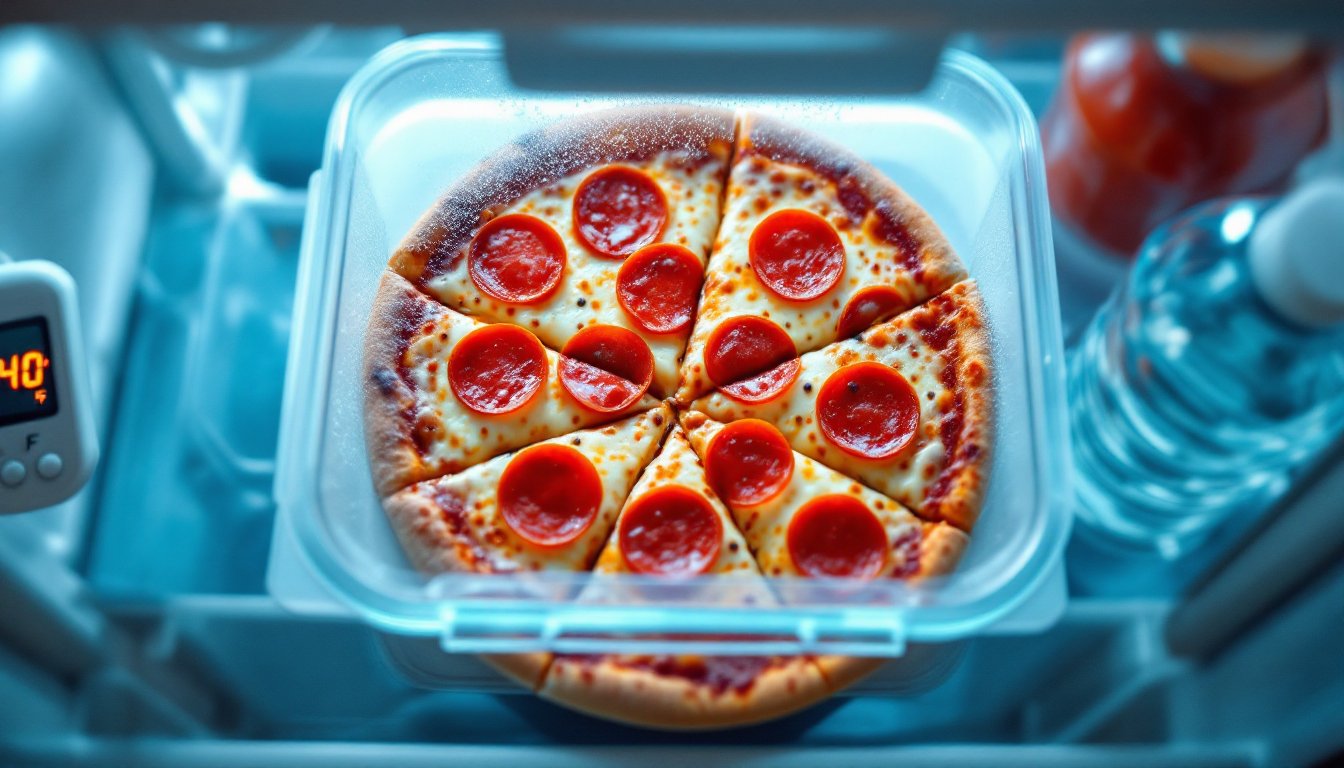
Temperature consistency matters more than most people realize. If your fridge fluctuates above 40°F, a common problem in older units or ones packed too full, the pizza’s safe window shrinks to 1–2 days. Check your fridge temperature with an inexpensive thermometer if you’re unsure. Bacterial growth accelerates rapidly in the “danger zone” between 40°F and 140°F, and pepperoni, sausage, and other toppings containing moisture and fat are prime targets for faster spoilage than plain cheese.
Proper Preparation Before Refrigerating
Don’t shove that pizza in the fridge while it’s still steaming. Let it cool to room temperature first, usually 30 to 45 minutes. Putting hot food directly into the fridge raises the internal temperature of everything around it, which risks cross-contamination and uneven cooling. Plus, condensation will form inside a sealed container, making the crust soggy.
Remove the pizza from the cardboard box immediately. The box absorbs moisture and grease, trapping humidity that accelerates mold growth and bacterial activity. Even if the box is resealable, don’t trust it for long-term storage. Take this extra minute to transfer the pizza to proper storage, and you’ve already improved its shelf life by a day.
If the pizza came with dipping sauce, remove the lid and refrigerate the sauce separately. Sauce pooling on the pizza’s surface and crust creates moisture buildup that invites bacterial growth. Keep toppings as dry as possible, if you’ve got water pooling from fresh vegetables or a very wet sauce, blot it gently with a paper towel before storing.
The Best Containers and Wrapping Methods
An airtight plastic container is your best friend for pizza storage. Shallow takeout containers work fine if the pizza lies flat: tall containers force you to stack slices, which causes the bottom pieces to get crushed and the tops to sweat. Glass containers with airtight seals are equally effective and let you see what’s inside without opening the lid.
If you don’t have a dedicated container, tightly wrap each slice in plastic wrap or aluminum foil, then store the wrapped slices in a zip-top bag. This double-barrier method keeps air and odors out while preventing the crust from drying out. Avoid wrapping hot pizza, the steam will condense inside, making everything soggy.
Some folks use parchment paper between layers of pizza to prevent sticking. That works, but you’ll still need an airtight container around those layers, or the edges will dry out. Parchment alone doesn’t seal moisture: it just prevents direct contact. A better hack: lay a paper towel on the bottom of your airtight container to absorb excess grease, then layer pizza directly on top. This keeps the bottom crust from getting soggy while the container seals the top.
Pizza stored in the original box can last 1–2 days in the fridge before drying out, but how long can you keep pizza in the refrigerator in proper containers? You’ll consistently get 3–4 days with an airtight seal.
Signs That Your Refrigerated Pizza Has Gone Bad
Trust your senses. A sour or off smell is the first sign the pizza has crossed into unsafe territory. Open the container and take a quick sniff, mold, fermentation, or a vinegary odor all mean the pizza should go straight to the trash. Don’t taste-test to confirm: bacterial contamination isn’t always visible or smelly.
Look for visible mold on the crust, toppings, or sauce. It might be white, green, or fuzzy. Any mold means the whole slice goes, mold roots spread through food faster than surface growth suggests. Discoloration on the toppings (darkening or separation of oils) is a warning sign, though not always conclusive. A slightly dried crust is normal and harmless: a slimy or sticky texture is not.
If the pizza has been in the fridge for more than 4 days, don’t second-guess it. The USDA rule is clear: discard it. Pathogens like Listeria and Staphylococcus can grow without obvious signs, and your nose won’t catch everything. Older pizza may also have developed harmful bacteria that heat alone won’t kill during reheating.
How to Reheat and Enjoy Leftover Pizza
The oven is the gold standard for reheating pizza. Preheat to 350°F, place slices on a baking sheet or pizza stone, and heat for 5–10 minutes until the cheese melts and the crust crisps up. This method restores the crust’s texture without drying it out or creating a tough, chewy mess. A pizza stone works especially well because it distributes heat evenly and mimics a professional oven.
The toaster oven is a close second and faster for 1–2 slices. Use the same temperature and watch for doneness: toaster ovens can heat unevenly. Avoid the microwave if you care about texture, it’ll heat the toppings and sauce quickly but leave the crust rubbery and tough. If speed is all that matters, 30–45 seconds in the microwave will warm it, but you’re sacrificing quality.
A cast-iron skillet on the stovetop works in a pinch. Heat it over medium-low heat, place the slice in the pan, cover it loosely with foil, and let it warm for 2–3 minutes. This method crisps the bottom without overdrying the top. The skillet’s retained heat mimics the oven’s effect on the crust. Whichever method you choose, get the pizza back to a temperature of at least 165°F to ensure food safety, though a visual check for melted cheese is usually enough for previously cooked toppings.
Freezing Pizza for Extended Storage
If you know you won’t eat the pizza within 4 days, freeze it. Properly frozen pizza stays safe indefinitely, though quality degrades after 2–3 months. The earlier you freeze, the better, fresh pizza freezes better than pizza that’s already been in the fridge for a few days.
Wrap each slice tightly in plastic wrap, then place wrapped slices in a freezer-safe zip-top bag, pressing out as much air as possible. Label the bag with the date. Alternatively, lay unwrapped slices flat on a baking sheet, freeze for 2 hours until solid, then transfer to a freezer bag, this prevents sticking and makes it easy to grab one slice at a time.
To reheat frozen pizza, thaw it in the refrigerator overnight (moving it to the fridge the night before), then reheat using the oven method described above. Don’t thaw at room temperature, as that invites bacterial growth. You can also reheat frozen pizza directly from the freezer by adding 2–3 extra minutes to the oven time. The crust quality won’t be identical to fresh pizza, but frozen-then-reheated pizza is entirely safe and still tastes good when reheated properly. This method transforms that leftover pizza into a backup meal weeks down the road, perfect for busy weeknights when creating a stylish and functional kitchen space means having reliable quick meals on hand.
Conclusion
Pizza doesn’t have to be eaten immediately, but it does have a window. Three to four days in an airtight container at a consistent 40°F or below is the safe standard. Proper prep, cooling before storage, removing the cardboard, and using sealed containers, extends both safety and flavor. When in doubt, trust your eyes and nose, and don’t hesitate to toss it. Leftover pizza is a convenience, not a commitment to eat questionable food.