Table of Contents
ToggleMost homeowners grab a stick of butter and toss it straight into the fridge without much thought. But if you’re wondering how long butter lasts in the refrigerator, you’re asking exactly the right question, especially when trying to reduce food waste or planning meals around what you have on hand. The answer depends on whether the butter is opened, how you store it, and what temperature your fridge maintains. Understanding proper butter storage not only keeps your pantry organized but also ensures you’re using fresh ingredients for baking, cooking, and spreading. This guide covers everything you need to know about butter shelf life, storage best practices, and how to tell when it’s past its prime.
Key Takeaways
- Unopened butter lasts 3 to 4 months in the refrigerator at 40°F or below, while opened butter stays fresh for 1 to 3 months with proper storage.
- Store butter in the coldest part of your fridge (toward the back of a shelf) rather than on the door, where temperature fluctuations shorten its lifespan.
- Salted butter lasts slightly longer than unsalted butter because salt acts as a natural preservative, making it ideal for frequent users.
- Rancid butter develops an unmistakable sour smell and may show color changes, mold, or visible separation—trust your nose and discard it immediately.
- Freezing butter extends its lifespan to 6 to 9 months, making it perfect for bulk purchases and stocking up during sales, but thawed butter should never be refrozen.
- Keep butter in its original packaging or transfer to an airtight container to prevent oxidation and odor absorption from other refrigerator foods.
Understanding Butter Shelf Life and Storage Basics
Butter is a preserved dairy product made by churning cream, and its relatively high fat content naturally protects it from spoiling quickly. Unlike fresh milk or cream, butter can last surprisingly long when stored properly. The shelf life depends on whether the butter is opened and how consistently cold your refrigerator stays.
Unopened butter typically lasts 3 to 4 months in the refrigerator at a steady 40°F (4°C) or below. Once you open a stick or tub, the timeline shortens slightly because the surface is exposed to air and potential contamination. Opened butter usually stays fresh for 1 to 3 months in the fridge, assuming consistent, proper storage conditions.
Temperature consistency is critical. A refrigerator that fluctuates, say, warming up every time the door opens and someone grabs a drink, will shorten butter’s lifespan. If your fridge stays at a steady 40°F or below, you’re in good shape. If it climbs toward 45°F or higher, you’re rolling the dice. Home improvement enthusiasts who’ve recently upgraded their kitchen appliances should verify their refrigerator’s actual internal temperature with a simple appliance thermometer: many fridges run warmer than owners realize.
Refrigerator Storage Duration for Opened Butter
Once you’ve opened a package of butter, the clock starts ticking differently. How long can you keep butter in the refrigerator after opening? The answer is 1 to 3 months, though most culinary standards lean toward the 1 to 2 month window for best quality.
The reason opened butter doesn’t last as long comes down to exposure. Every time you spread butter on toast or add it to a hot pan, you’re introducing potential bacteria, moisture, and heat to the remaining stick. If you use a knife to scoop cold butter and immediately place it back in the fridge, contamination risk is minimal. But if warm butter drips back onto the stick or if it sits on the counter for extended periods, degradation accelerates.
Salted butter lasts slightly longer than unsalted butter because salt acts as a natural preservative. If you frequently bake or cook, comparing salted versus unsalted options is worth your time, the extra month of shelf life from salted butter can be a practical bonus, provided your recipes allow for it. For homeowners managing multiple butter sticks for different uses (baking, cooking, spreading), labeling opened packages with the date they were opened removes the guesswork. A simple sticky note or marker on the packaging takes 10 seconds and prevents waste.
How to Tell If Your Butter Has Gone Bad
The safest approach is to check your butter before using it. Rancid butter develops an off, sour, or unpleasant smell, it’s unmistakable once you’ve encountered it. If you open the fridge and catch a funky odor from the butter compartment, trust your nose and discard it.
Color changes can also signal spoilage. Fresh butter ranges from pale yellow to golden depending on the cow’s diet and the season. If butter develops a darker color, streaks of mold, or visible separation with a liquid pooling on top, it’s past its prime. Mold growth, though rare in properly stored butter, is a hard stop, discard the entire stick. Even if mold appears only on the surface, butter’s porous structure means mold spores can penetrate deeper than you might think.
Taste is a last resort. If you’re unsure and the smell and appearance seem borderline, a tiny taste on your tongue reveals whether the butter is rancid. If it tastes off or bitter, spit it out and toss the rest. Your taste buds are sensitive enough to detect rancidity before it makes you sick, but there’s no reason to test it if other indicators are present. When in doubt, throw it out, a stick of butter costs a few dollars and isn’t worth the risk of off-flavored food or foodborne illness.
Best Practices for Storing Butter in Your Fridge
Optimal Temperature and Location
The foundation of proper butter storage is maintaining a stable refrigerator temperature of 40°F (4°C) or lower. Check your fridge’s built-in thermometer, but don’t trust it completely, appliance thermometers are cheap insurance. Place a thermometer on a shelf and check it after the fridge has run for 24 hours to get a true read. If your fridge runs warmer than 40°F, adjust the thermostat or consult your refrigerator manual for temperature controls.
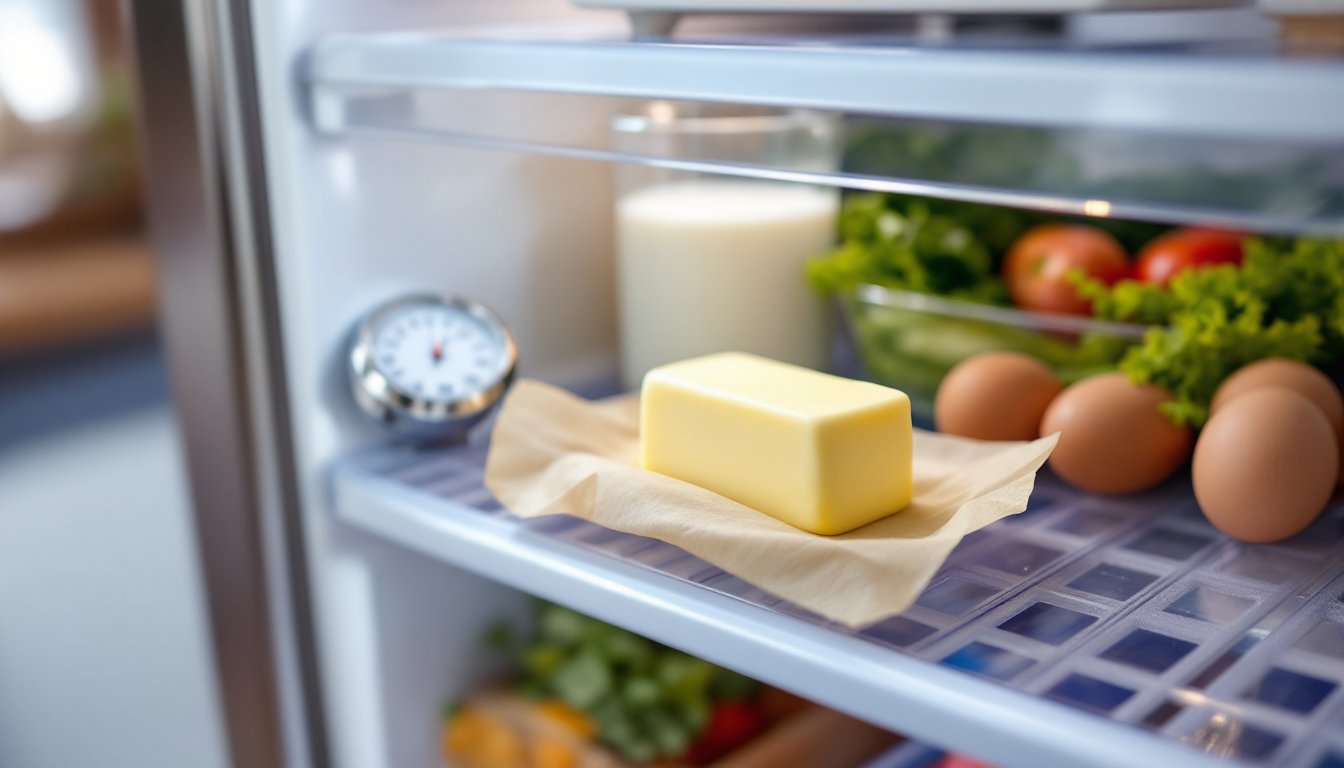
Location matters too. Store butter in the coldest part of your fridge, which is typically toward the back of a shelf, never on the door. The door is the warmest zone because it’s constantly opening and closing, allowing warm air to enter. Butter stored on the door shelf will soften faster and develop rancidity sooner. If your fridge has a dedicated butter compartment with a cover, use it, it’s designed to provide a slightly insulating barrier and minimize temperature swings.
Packaging and Container Tips
Keep butter in its original packaging whenever possible. The paper or cardboard wrapper provides a protective layer against air exposure and odor absorption from other foods. If you transfer butter to a container, use an airtight option like a glass or plastic butter dish with a fitted lid. Airtight prevents oxidation and stops the butter from absorbing refrigerator odors, a common problem with open or loosely covered sticks.
For those storing multiple sticks, wrap opened butter tightly in plastic wrap or aluminum foil before returning it to the fridge. This extra layer reduces air contact and keeps the surface from drying out or picking up ice crystals. If you frequently use butter for baking projects, keeping one stick at room temperature in a covered butter dish on the counter is practical, just use it within a week or so. The remaining sticks stay refrigerated, fresh and ready when you need them.
Extending Butter Freshness: Freezer Alternatives
If you buy butter in bulk or want to extend its lifespan beyond what the refrigerator allows, the freezer is your answer. Frozen butter lasts 6 to 9 months, sometimes up to a year, depending on the freezer’s temperature stability and whether it’s in a frost-free model. Frost-free freezers cycle temperature occasionally to prevent ice buildup, which can damage butter’s texture slightly over time, but the butter remains safe to use.
Freezing butter is straightforward. Keep it in its original packaging and wrap it in an additional layer of plastic wrap or place it in a freezer bag to prevent freezer burn. Label the package with the freezing date so you remember how long it’s been stored. When you need butter, transfer it to the refrigerator to thaw, usually 12 to 24 hours depending on thickness. Never refreeze thawed butter: once it’s thawed, use it within the normal refrigerator timeline.
For homeowners with large freezers and regular baking schedules, stocking frozen butter during sales makes financial sense. A box of four sticks takes minimal freezer space and ensures you always have butter available. If you’re renovating a kitchen and considering appliance upgrades, verifying your new freezer’s temperature consistency with a thermometer is worth the five minutes it takes, consistent freezing directly impacts how long your stored butter and other frozen goods maintain quality.