Table of Contents
ToggleLeftover Chinese takeout is a blessing and a curse. That container of fried rice or lo mein sitting in the back of the fridge looks fine, but how long is it actually safe to eat? Food safety isn’t glamorous, but it’s essential, and when it comes to refrigerated Chinese food, the answer depends on what you’re storing and how you store it. Most Chinese dishes last 3–4 days in the refrigerator when stored properly, though some last longer and others spoil faster. Understanding the storage rules for your favorites helps prevent foodborne illness while maximizing those delicious leftovers.
Key Takeaways
- Most Chinese food lasts 3–4 days in the refrigerator when stored properly in airtight containers at 40°F or below.
- Refrigerate Chinese food within two hours of purchase or cooking to prevent bacterial growth and foodborne illness.
- Saucy dishes like General Tso’s chicken and seafood-based items require consumption within 3–4 days, with shrimp dishes on the shorter end at 3 days.
- Soups and broths last longer—up to 4–5 days—thanks to high cooking temperatures and acidic components that naturally preserve them.
- Use smell as your primary safety indicator; trust your nose to detect off-odors, and discard any Chinese food with visible mold, slime, or rotten smells.
- Freeze Chinese food leftovers within 3–4 days for storage beyond the refrigerator window, where most dishes remain safe for 2–3 months.
General Rules For Storing Chinese Food At Home
The foundation of safe food storage is temperature control and timing. Refrigerate Chinese food within two hours of purchase or cooking, this is the critical window before bacteria multiply to dangerous levels. If the food sat at room temperature longer than that, it’s safer to discard it.
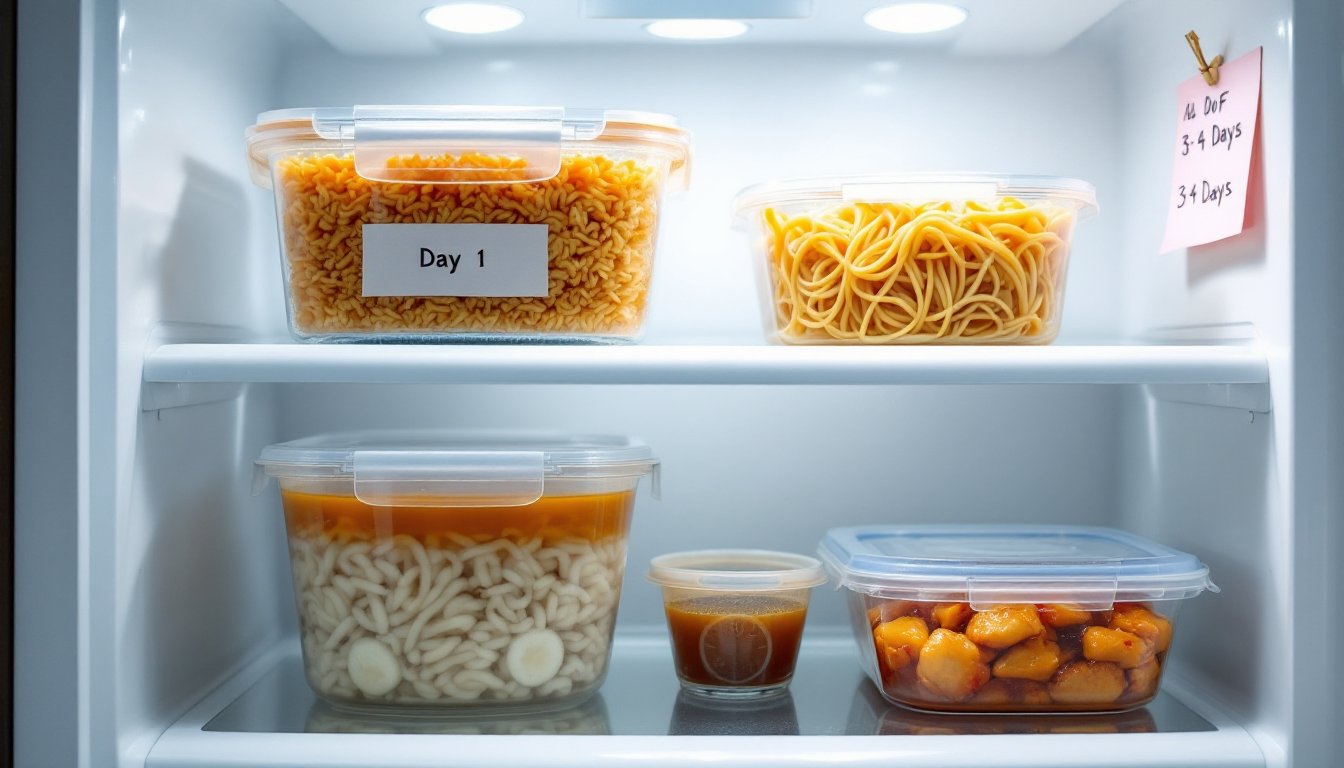
Store leftovers in airtight containers rather than the original takeout boxes. Takeout containers aren’t designed for long-term refrigeration and often don’t seal well, allowing air and odors to circulate. Glass or hard plastic containers with locking lids work best. Label containers with the date you stored the food: a marker on a piece of tape stuck to the container takes seconds and saves guesswork later.
Keep your refrigerator at 40°F or below, any warmer and bacteria grow faster. If you’re not sure about your fridge’s temperature, pick up an inexpensive refrigerator thermometer. Placement matters too: store food on a middle or lower shelf, never on the door where temperatures fluctuate more when the door opens and closes. This is especially important for saucy dishes where bacteria can spread through the liquid.
Storage Times By Common Chinese Dishes
Rice, Noodles, And Stir-Fry Dishes
White and brown rice, egg fried rice, and plain steamed noodles keep for 3–4 days in the refrigerator when stored in airtight containers. Stir-fried vegetables and noodle dishes without heavy sauces also fall into this window. The key is isolation: if your fried rice container isn’t airtight, moisture escapes and the texture deteriorates faster, even if it’s still technically safe.
Chow mein and crispy chow fun noodles are trickier because they absorb moisture. Even in sealed containers, they’ll start losing their crunch after 2–3 days. If you enjoy the crispy texture, eat them within 24–48 hours. Softer noodle dishes like lo mein tolerate refrigeration better, they’ll stay good for 3–4 days.
Soups, Broths, And Saucy Dishes
Clear broths, hot and sour soup, and egg drop soup last longer than you’d think: 4–5 days in the refrigerator. The acidic components in some soups (like hot and sour) and the high temperature at which they’re cooked actually help preserve them slightly. Store them in containers with enough headspace, don’t fill them to the rim, as soups expand slightly when cold.
Heavily sauced dishes like General Tso’s chicken, sweet and sour pork, or chow chow chop suey stay safe for 3–4 days. But, food safety authorities and guides on refrigerator food storage durations stress that sauces don’t preserve meat or vegetables indefinitely. The sauce creates a barrier, but once opened and refrigerated, bacteria can still colonize the dish. Thick, heavily spiced sauces may seem to last longer, but appearance and smell are your real safety indicators, not the sauce intensity.
Proteins And Cooked Meats
Cooked poultry (chicken in various dishes), pork, shrimp, and beef from takeout last 3–4 days when stored separately or as part of a complete dish. Shrimp dishes are on the shorter end, eat them within 3 days if possible. Ground meat in dishes like Mongolian beef should be consumed within 3 days.
If you’ve removed the meat from sauce to store it separately (a smart move for maximizing shelf life), it’ll stay fresh for 3–4 days in a sealed container. Some cooks freeze excess protein after the first 24 hours to extend its life beyond the fridge window. This works well: frozen cooked Chinese proteins stay safe for 2–3 months.
Best Practices For Proper Food Storage And Safety
Cool food before refrigerating. Hot takeout fresh from the restaurant will warm up your fridge if stored immediately. Let it cool to room temperature (about 30 minutes for a standard takeout container), then refrigerate. This prevents other foods from warming up and keeps your fridge running efficiently.
Portion and divide wisely. If you know you’ll only eat half the container, remove and store just that portion. Reopening and resealing containers repeatedly increases exposure to air and bacteria. Leave the rest in a separate sealed container for later.
Use the freezer for longer storage. Chinese food freezes well if you’re willing to sacrifice a little texture in noodles and rice. Freeze within 3–4 days for best results. Most Chinese dishes thaw safely in the refrigerator overnight and reheat easily. Avoid the microwave for reheating if possible, use a skillet or oven to restore texture and prevent hot spots where bacteria might survive uneven heating.
Practice rotation. When you store new leftovers, place them behind older containers so older food gets eaten first. This seems obvious but it’s easy to miss containers hiding in the back.
Clean your refrigerator regularly. Spills, leaks, and old containers breed bacteria. Wipe shelves weekly and discard anything past its storage window. A clean fridge is a safe fridge.
How To Tell If Your Chinese Food Has Gone Bad
Don’t rely solely on appearance. Some spoiled food looks fine, while other perfectly safe leftovers might look discolored simply from storing with soy sauce or turmeric.
Smell is your best friend. Open the container and take a whiff. Off-odors, sourness, staleness, or anything that smells fermented or rotten, mean it’s time to toss. Trust your nose: it’s remarkably accurate at detecting bacterial growth.
Visible mold or slime. If you see mold (green or white fuzzy spots) anywhere in the container, discard the entire contents. Don’t just scrape it off. Mold roots run deeper than visible growth. Slime or an unusually wet texture on rice or noodles also signals spoilage.
Taste (use caution). If the smell and look pass, a tiny taste can confirm. If it tastes off, sour, metallic, or just wrong, spit it out and discard. Don’t let a small taste go down your throat if something feels wrong. If you’ve stored it beyond 4–5 days, skip this step and just throw it away.
When in doubt, throw it out. Foodborne illness isn’t worth the gamble. If you can’t remember when you stored something, or if it’s been more than 5 days, discard it. The cost of a meal is nothing compared to food poisoning.
Keep in mind that food safety varies by ingredient and preparation. Dishes with seafood (like shrimp or crab) are riskier than poultry-based dishes, and items with dairy or egg are also more perishable. Resources like kitchen organization guides emphasize the importance of labeling and rotation to prevent mystery containers.