Table of Contents
ToggleA Dyson vacuum is an investment in clean floors, but only if you keep the head clean. When the brush roll clogs with hair and the suction drops, homeowners often blame the machine when the real culprit is a neglected cleaning head. Regular maintenance takes about 15 minutes and makes the difference between a high-powered cleaner and a struggling appliance. This guide walks through the straightforward steps to restore your Dyson’s suction and extend its lifespan without any special skills or expensive parts.
Key Takeaways
- Cleaning your Dyson vacuum head monthly prevents suction loss and extends the machine’s lifespan from 3–4 years to many more years of high performance.
- To clean a Dyson vacuum head, remove it, carefully cut away wrapped hair from the brush roll with scissors, scrub with warm soapy water, and allow 24 hours for complete drying before reattaching.
- Regular weekly maintenance—emptying the bin, removing tangled hair with scissors, and checking intake vents—reduces the need for deep cleaning and keeps suction powerful between maintenance sessions.
- Most Dyson suction problems stem from three fixable issues: a full dust bin, a clogged head, or a blocked hose, all resolvable at home in under 10 minutes without special tools or parts.
- Always unplug your Dyson before cleaning the head, use warm (not hot) water to avoid warping seals, and keep water away from the motor housing to prevent damage.
Why Regular Dyson Head Cleaning Matters
Your Dyson’s suction power depends on unobstructed airflow. Hair, pet fur, dust, and fibers wrap around the brush roll and accumulate in the ductwork, blocking air passage and forcing the motor to work harder. When airflow is restricted, suction drops noticeably within weeks of regular use.
Beyond performance, a clogged head reduces the machine’s lifespan. The motor strains to pull air through the blockage, causing premature wear. Dyson recommends checking and cleaning the head every month for typical household use, and weekly if you have pets or longer-haired carpets.
Cleaners that undergo regular maintenance maintain their rated suction for years. Those neglected often fail within 3–4 years. A quick monthly cleaning is the cheapest maintenance you’ll do.
What You’ll Need Before Starting
Most of what you need is already in your home. Here’s the full checklist:
Materials:
• Warm water (not hot, Dyson seals can warp)
• Dish soap or mild detergent
• A soft brush or old toothbrush
• Clean, lint-free cloth or paper towels
• Small scissors or a seam ripper (for cutting wrapped hair)
Optional but helpful:
• A small bowl or bucket
• Compressed air (for blowing out fine dust)
• Flat-head screwdriver (for models with clips rather than twist-lock heads)
Check your specific Dyson model’s manual, V-series, V15, V11, and older DC models have slightly different head designs. Most modern uprights use a simple push-release or twist-off system, but it’s worth confirming before you start. You won’t need power tools, specialized parts, or replacement filters for this job.
Step-By-Step Cleaning Instructions
Remove The Head and Inspect For Blockages
Unplug the vacuum from the wall outlet first, never work on powered equipment. Most Dyson uprights have a release button or trigger at the base of the head that detaches it from the wand. Press or squeeze this button and gently pull the head away. Some models twist counterclockwise: check the manual or try a gentle twist if pressing doesn’t work.
Once removed, hold the head up to a light and look through the air vents and brush roll chamber. You’ll likely see a mat of hair, dust, and pet fur coating the brush roll and blocking the intake slots. Flip the head over and inspect the underside of the brush roll, that’s where the worst tangles usually hide.
Clear Hair and Debris From The Brush Roll
Using small scissors or a seam ripper, carefully cut away any hair wrapped around the brush roll. Start at one end and work toward the other, slicing parallel to the bristles so you don’t accidentally nick them. This is tedious but essential, pulling at tangled hair risks damaging the bristles or the bearing that spins the brush.
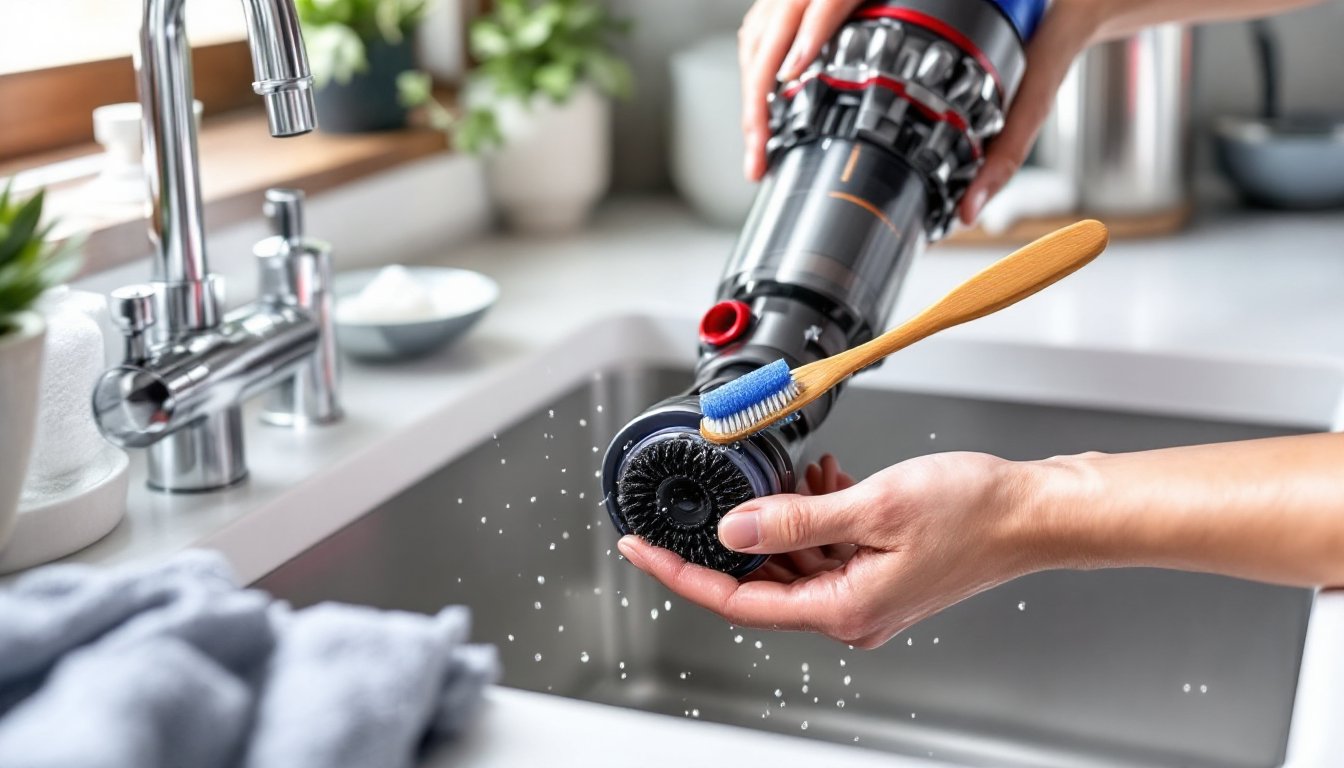
Once the worst is removed, use an old toothbrush or soft-bristled brush to scrub the bristles while rinsing under warm running water. Hold the head so water flows away from the motor end of the head. Pay attention to the base of the bristles, that’s where compacted dust and pet dander collect and restrict suction.
For the intake slots and ductwork, a compressed air canister blows out fine dust better than water. If you don’t have one, a vigorous tap over a trash can works, or just run water through gently. Don’t force water into the motor housing, keep it away from the sealed end.
Wash and Dry All Components
Once the brush roll is clear, submerge the entire head in a basin of warm water with a teaspoon of dish soap. Let it soak for 5–10 minutes if the buildup is stubborn. Then scrub the bristles, slots, and any plastic or rubber seals with your soft brush.
Rinse thoroughly under running water until the water runs clear and no soap remains. Any residue will affect suction and can degrade seals over time. Shake off excess water gently.
Drying is crucial, mold and mildew thrive in damp synthetic bristles. Stand the head upright on a clean cloth or paper towel in a warm, dry place (near a window or fan speeds things up). The Spruce recommends allowing 24 hours of complete drying before reassembling and using the vacuum. If you’re impatient, point a hair dryer on a low setting at the brush bristles for 5–10 minutes, keeping the heat away from plastic seals.
Once bone-dry, reattach the head to the wand by reversing the removal process, push or twist firmly until you hear or feel a click. Run the vacuum for a few seconds unplugged, spinning the brush by hand to ensure it spins freely and doesn’t rub.
Maintaining Your Dyson Between Deep Cleans
A quick weekly maintenance routine prevents buildup and extends the time between full cleanings. Empty the dust bin immediately after each use, a full bin blocks airflow nearly as much as a clogged head. For homes with pets or long-haired family members, empty it after every session, even if it looks half-full.
Inspect the brush roll visually once a week without removing the head. If you see hair tangled around it, spend 2–3 minutes with scissors cutting it away. This 2-minute task beats a 15-minute deep clean later.
Check that the intake vents (the slots around the brush roll chamber) aren’t packed with lint. A gentle tap over the trash can or a quick pass with the hand-held attachment while pointed downward clears loose debris. CNET’s testing shows that regular filter checks are equally important, if your Dyson has a pre-filter or washable motor filter, rinse it monthly under cool water and air-dry completely before reinstalling.
Store your Dyson in a dry place. Damp basements and garages encourage mold growth inside the hose and bin. A shelf in a closet or garage corner, away from direct sunlight, is ideal.
If suction suddenly drops after a full cleaning, check the hose next, blockages often hide inside, especially if you’ve vacuumed coins, buttons, or pet toy pieces. Shine a flashlight through it, or lay it flat and look for kinks or obstructions. Good Housekeeping’s appliance care guides emphasize that most Dyson performance issues trace back to these three culprits: a full bin, a clogged head, or a blocked hose, all fixable at home in under 10 minutes.