Table of Contents
ToggleA dishwasher sitting idle with standing water at the bottom is both a hygiene concern and a potential sign of a deeper mechanical issue. Whether you’re dealing with a slow drain, a complete blockage, or just leftover water after a cycle, knowing how to drain water from your dishwasher can save you time, money, and the hassle of calling a repair technician. This guide walks you through diagnosing the problem, safely removing water, and getting your dishwasher back in working order. Most homeowners can handle these tasks with basic tools and a little patience, and if something requires professional help, you’ll know it upfront.
Key Takeaways
- The most common causes of dishwasher drainage issues are clogged filters, blocked drain hoses, and malfunctioning pumps—most of which you can fix at home without professional help.
- Always turn off the dishwasher at the circuit breaker before attempting to drain water or clean the system to ensure your safety.
- To drain water from your dishwasher, use a manual bailing method for small amounts or a wet/dry vacuum for larger volumes, then clean the filter and inspect the drain hose.
- Clean the filter monthly by removing debris, rinsing under running water, and soaking in baking soda solution if needed to prevent standing water.
- Inspect and clear the drain hose by disconnecting it, flushing with warm water, and checking for kinks or blockages that restrict flow.
- Prevent future drainage problems by pre-rinsing dishes, running monthly cycles, avoiding dishwasher overloading, and inspecting the hose annually for cracks or mineral deposits.
Why Your Dishwasher Isn’t Draining Properly
Standing water in a dishwasher usually points to one of a few culprits: a clogged filter, a blocked drain hose, or a malfunctioning pump. The good news is that most of these issues are fixable at home without special certifications or expensive equipment.
Clogged Filter or Drain Basket
Your dishwasher’s filter and drain basket trap food particles, soap residue, and debris to prevent them from clogging the plumbing. Over time, these components accumulate gunk. A clogged filter is the single most common reason dishwashers don’t drain. Look at the bottom of the tub, you’ll see a cylindrical or basket-shaped component, usually removable by hand or a quarter-turn twist. If it’s packed with food or sludge, water can’t flow past it.
Blocked Drain Hose
The drain hose runs from the dishwasher to either the garbage disposal or a dedicated drain line, usually underneath the sink. A kink in the hose, a trapped food particle, or mineral buildup inside can restrict water flow. Dishwasher drainage issues often stem from blockages in this hose, which is why checking it early in the troubleshooting process saves time. Unlike the filter, diagnosing a hose blockage requires a bit more investigation, you may need to disconnect it to inspect it visually or run water through it.
Preparation Steps Before Draining
Before you start, turn off the power to the dishwasher at the circuit breaker. Even if you’re just bailing out water manually, it’s safer to disable the unit so a cycle doesn’t suddenly start. This is non-negotiable.
Next, open the door fully and assess the situation. How much water are we talking about, a puddle, or several inches? Mild pooling at the bottom is normal if the cycle just finished: water should drain within a few minutes once the pump engages. Excessive standing water after 15–20 minutes indicates a drainage problem.
Gather your supplies: a towel or two, a shallow bucket, a sponge or cup for manual bailing if needed, and a flashlight to see inside. Wear safety glasses if you plan to use tools or compressed air. If you’re working under the sink to access the drain hose, have a bucket ready, water will spill. Proper preparation takes five minutes and prevents messes and wasted time fumbling for supplies mid-project.
Manual Draining Methods for Standing Water
If water won’t drain on its own, you’ll need to remove it manually before you can clean the system. Here’s how:
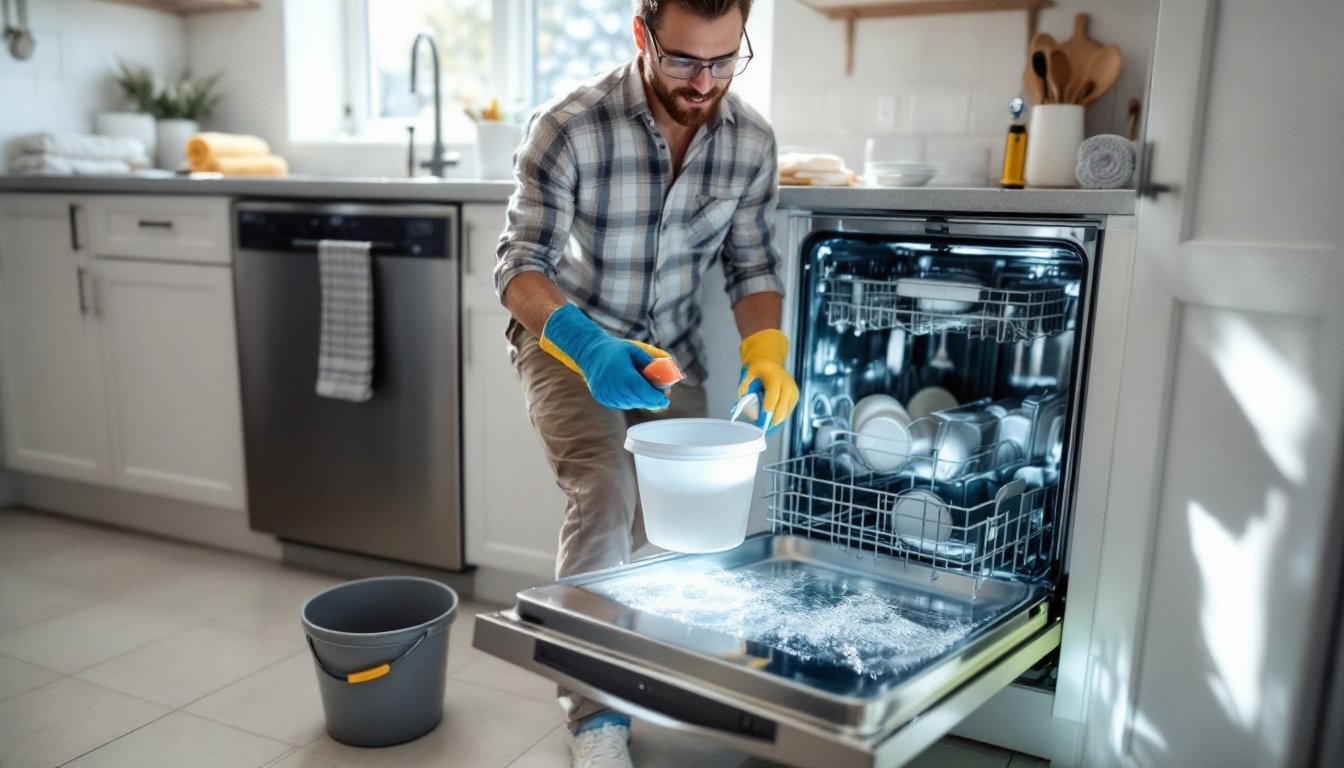
Bailing Method (for small amounts of water):
- Place a shallow bucket or large container next to the dishwasher.
- Use a cup, sponge, or turkey baster to scoop water from the tub into the bucket.
- Tilt the bucket carefully to avoid splashing and repeat until most water is gone.
- Once the water level is low, use a towel to absorb the remaining moisture.
Wet/Dry Vacuum Method (for larger volumes):
- If you have a wet/dry vacuum on hand, this is faster. Set it to wet mode per the manufacturer’s instructions.
- Place the nozzle in the dishwasher tub and remove water in sections.
- Empty the vacuum tank frequently to maintain suction.
Drain Pump Access (advanced):
Some dishwasher models allow you to access a manual drain pump, typically a small knob or lever inside the tub near the filter. Check your owner’s manual, if yours has one, turning it counterclockwise may release trapped water. Don’t force it: if it doesn’t budge, skip this step.
Don’t use hot water or cleaning solutions during manual draining: plain tap water is safer and sufficient. Step-by-step cleaning instructions can guide you through safely removing water without damaging interior components.
Cleaning the Drain System
Once you’ve removed standing water, it’s time to clean the components blocking flow.
Cleaning the Filter and Drain Basket:
- Remove the filter by twisting it counterclockwise or pulling straight up, depending on your model.
- Rinse it under running water, scrubbing gently with an old toothbrush or soft brush to dislodge debris.
- For stubborn buildup, soak it in warm water with a tablespoon of baking soda for 15 minutes, then scrub again.
- Inspect the drain basket opening beneath the filter, use a flashlight and your fingers or a small brush to remove any trapped particles.
- Reinstall the filter with a firm twist or push until it seats fully.
Inspecting and Clearing the Drain Hose:
- Turn off the water supply shutoff valve under the sink (the knob on the water line feeding the dishwasher).
- Locate the drain hose where it connects behind the dishwasher. You’ll typically find a hose clamp holding it in place.
- Loosen the clamp with a flathead screwdriver and carefully disconnect the hose.
- Place a bucket underneath to catch residual water.
- Flush the hose with warm water from a kitchen faucet, aiming both directions. If water doesn’t flow freely, kinks or blockages are present.
- For stubborn clogs, use a plumbing snake or straightened wire coat hanger to gently push the obstruction through.
- Reconnect the hose securely, ensuring the drain hose slopes downward toward the exit (a kink or upward bend traps water).
- Reopen the water shutoff valve.
If the hose is cracked or has mineral scaling that won’t budge, replacement is simpler than repair, hoses cost $15–$40 and swap out in under an hour. Comprehensive dishwasher troubleshooting guides provide visual references for hose routing if yours isn’t standard.
Testing and Preventing Future Drainage Issues
Before you declare victory, test the drainage system:
- Close the dishwasher door and turn the power back on at the circuit breaker.
- Run a short cycle (quick wash or rinse) to see if water drains properly.
- Stop the cycle midway through to observe if water drains during operation.
- Once the cycle finishes, open the door and check the bottom. No water should remain after a few seconds.
If water still pools, the pump itself may be faulty, that’s when you call a professional. Most in-home dishwasher repair services charge $150–$300 for diagnostics and repairs, depending on the part needed.
Prevention Tips:
- Pre-rinse dishes lightly before loading to reduce debris entering the system.
- Clean the filter monthly, especially if you have a garbage disposal that backs up easily.
- Run the dishwasher regularly, monthly cycles keep the pump and seals from drying out and seizing.
- Don’t overload the bottom rack: blocked spray arms can’t reach the filter to flush debris.
- Use proper detergent amounts, excess suds interfere with drainage and pump function.
- Inspect the drain hose annually for kinks, cracks, or mineral deposits.
Regular maintenance catches small problems before they become costly failures. A 15-minute inspection and filter cleaning twice a year adds years to your dishwasher’s lifespan and keeps drain emergencies at bay.