Table of Contents
ToggleThe 1950s refrigerator stands as one of the most transformative appliances in American domestic history. More than a cooling box, it became a statement piece, a symbol of post-war prosperity, technological progress, and the modern kitchen. Today, homeowners and design enthusiasts are rediscovering these vintage gems, drawn to their dependable mechanical systems, distinctive aesthetic, and solid construction that often outlasts appliances made decades later. Whether restoring an original unit or hunting for one to anchor a retro kitchen, understanding what made 1950s refrigerators special reveals why they remain coveted pieces that bridge nostalgia with genuine functionality.
Key Takeaways
- A 1950s refrigerator combines reliable mechanical engineering, spacious 16–20 cubic foot capacity, and iconic design features like chrome handles and pastel colors that make these vintage appliances both functional and decorative.
- Common maintenance issues in vintage 1950s refrigerators include worn door gaskets ($25–75 to replace), dust-clogged condenser coils, and potential compressor problems, all of which are manageable with basic tools or professional vintage appliance service.
- Original 1950s refrigerators typically cost $200–800 at estate sales or auctions, while fully restored units from premium brands like General Electric can reach $1,500–3,000, making them worthwhile investments for mid-century modern kitchens.
- Vintage 1950s refrigerators integrate successfully into contemporary kitchens when paired with complementary design elements like hex-tile flooring, butcher-block countertops, and period-appropriate fixtures that celebrate their retro aesthetic.
- Unlike modern refrigerators, a 1950s model requires careful installation due to deeper and taller dimensions, ongoing maintenance, and slightly lower cooling efficiency, but delivers unmatched nostalgic appeal and solid construction that often outlasts newer appliances.
What Made 1950s Refrigerators Revolutionary
The Evolution From Ice Boxes to Electric Cooling
The jump from icebox to electric refrigerator happened remarkably fast. By 1930, electric models were already entering homes, but it wasn’t until the post-1945 boom that refrigeration became standard rather than luxury. A 1950s refrigerator typically featured sealed mechanical cooling systems using refrigerants like freon, automatic defrost cycles (a major convenience leap), and reliable compressors designed to run quietly for decades. These weren’t computers, they were mechanical engineering distilled to its purest form.
The 1950s specifically saw rapid innovation: frost-free models became mainstream, freezer compartments grew larger and more accessible, and door-mounted shelving, now standard, first appeared. Most units ran on 110-volt circuits, the same standard used today, making them relatively straightforward to operate. The absence of electronic controls meant fewer failure points: a stuck thermostat or worn gasket was fixable with basic tools rather than requiring a circuit board replacement.
What truly revolutionized the 1950s refrigerator was reliability paired with capacity. A typical model offered 16–20 cubic feet, substantially more than earlier generations, while energy consumption remained modest by today’s standards. Manufacturers like General Electric, Westinghouse, Philco, and Kelvinator built these units to last, and thousands still run today, a testament to the engineering standard of the era.
Design and Aesthetic Features of the Era
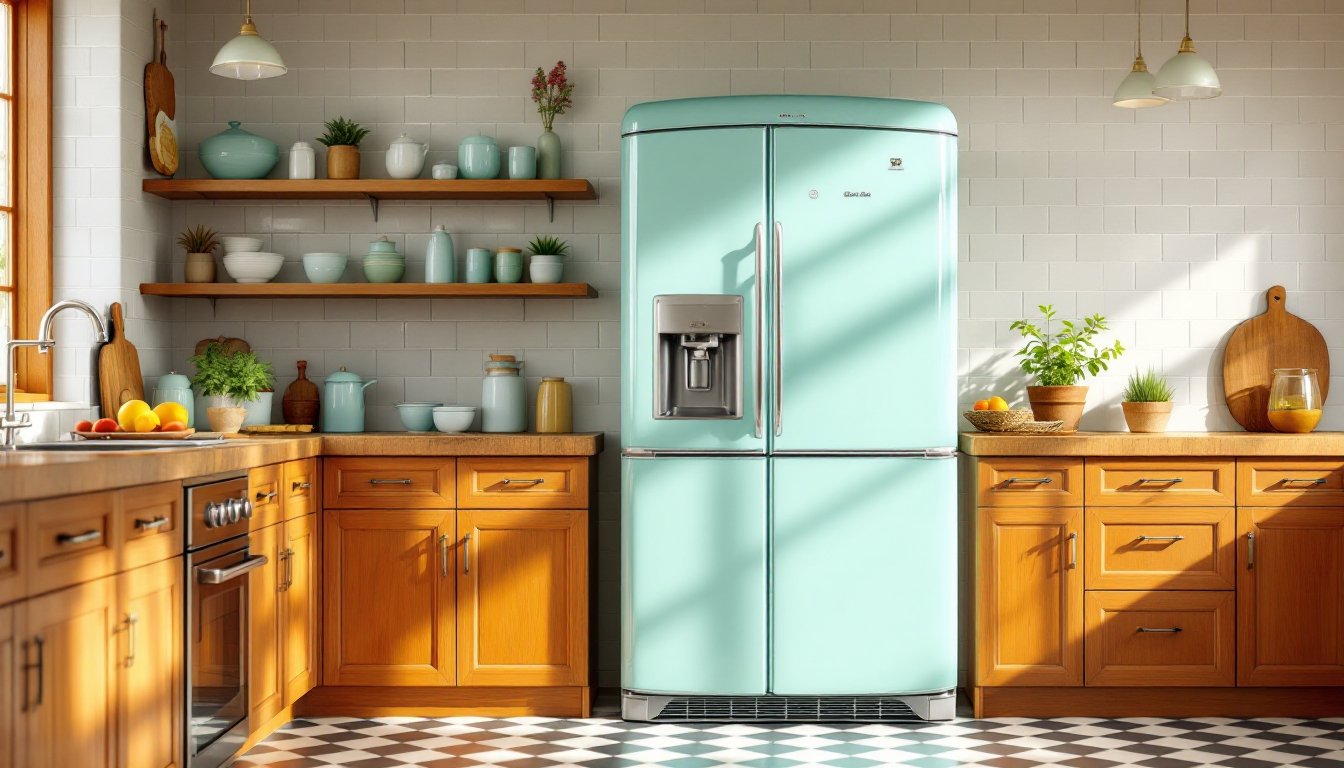
Walk into a 1950s kitchen and the refrigerator commands attention. Chrome handles, rounded corners, streamlined cabinet lines, and cheerful colors, pastel pink, turquoise, mint green, or classic white, define the period. The design philosophy merged functionality with optimism: these appliances were meant to be seen and admired, not hidden away.
Interior layouts reflected the era’s priorities. Shallow shelves tilted slightly forward so bottles and containers wouldn’t slide. Pull-out produce drawers featured wooden slats for ventilation. Many models included a dedicated butter compartment held at a slightly warmer temperature, and bottle racks molded directly into the door. These weren’t arbitrary details, they solved real storage problems before plastic containers and modern drawer systems existed.
Finishes varied widely. Chrome and stainless steel accents appeared on premium models. Porcelain enamel cabinets in solid colors or two-tone combinations were standard. Some deluxe units featured patterned enamel or boomerang-style decorative elements. The styling remains instantly recognizable and popular with homeowners restoring period kitchens or embracing retro design.
Restoring and Maintaining a Vintage 1950s Refrigerator
Common Issues and Practical Repair Tips
If you’ve inherited or acquired a 1950s refrigerator, it likely needs attention. The most common issues are straightforward: a worn gasket (the rubber seal around the door), a sluggish compressor, or freon loss. Before powering up any vintage unit, inspect it thoroughly.
Start with the door gasket, the rubber lining that creates an airtight seal. If it’s cracked, hardened, or doesn’t stick firmly to the cabinet, replacement is essential for efficiency and food safety. Gasket kits cost $25–75 and install with removal of four to six screws: gaskets are available for most common models through appliance parts suppliers. While you’re examining it, check that the door closes level and doesn’t sag.
Next, listen to the compressor when the unit runs. A loud rattling, grinding, or complete silence (when the thermostat calls for cooling) signals trouble. Compressor replacement is expensive and often isn’t economical unless the rest of the unit is in excellent condition. A technician familiar with vintage appliances can diagnose whether the compressor needs service or refrigerant recharging.
Clean the condenser coils, thin metal fins at the back or bottom, monthly when in regular use. Dust buildup reduces cooling efficiency dramatically. Unplug the unit, use a soft brush or vacuum with a brush attachment, and avoid bending fins. Check that the defrost drain (usually a small tube at the back or beneath the unit) isn’t clogged: a blocked drain causes water pooling inside.
Electrical cords on older units may have deteriorated insulation. Have a qualified electrician inspect before plugging in a long-dormant refrigerator. If the cord is cloth-wrapped and brittle, replacement ($50–150) is worthwhile for safety.
Finding and Valuing Original 1950s Refrigerators Today
Sourcing an original 1950s refrigerator takes patience. Estate sales, auction sites, and local buy-sell-trade groups often yield finds at reasonable prices, typically $200–800 for a working unit in fair-to-good condition. Rare colors (avocado, harvest gold, or unusual pastels) or premium brands command higher prices. A fully restored, pristine-condition unit from a desirable maker like General Electric can fetch $1,500–3,000 at specialty vintage appliance dealers.
When evaluating a potential purchase, check the serial number or nameplate to confirm the manufacturing year and brand. Request photographic documentation of the interior condition, any rust, or dents. Ask whether it currently runs, a non-functioning unit may require professional service before you even know what’s wrong. Request that the seller provide the refrigerant type if known: older units sometimes contain CFC refrigerants that are illegal to recharge and require careful decommissioning if they leak.
Be realistic about what you’re investing in. A 1950s refrigerator is a functional appliance first and a design statement second. It won’t cool quite as efficiently as a modern unit, and it may require ongoing maintenance. Features like adjustable shelving or LED lighting don’t exist. For homeowners designing a period kitchen or collectors of mid-century design, those trade-offs feel worthwhile. For others, a reproduction vintage-style refrigerator from brands showcasing retro designs might deliver the aesthetic without the repair uncertainty.
Incorporating Vintage Refrigerators Into Modern Kitchens
A 1950s refrigerator in a contemporary kitchen is a deliberate design choice, and when done thoughtfully, it works beautifully. The key is proportionality and context. A single well-maintained vintage unit can anchor a kitchen renovation celebrating mid-century modern style or farmhouse design. Pair it with complementary elements: hex-tile flooring, butcher-block countertops, open shelving, or period-appropriate fixtures.
Practical considerations matter. Vintage refrigerators are deeper and often taller than standard modern widths. Measure carefully before committing: a 1950s model may not fit your current cabinet run. Some homeowners place the unit as a statement piece in a kitchen island or alcove rather than in the standard under-counter position. Others integrate it into an auxiliary serving area or butlers pantry where a second cooling source and retro aesthetic both add value.
Combine it with modern conveniences. A vintage refrigerator works alongside contemporary appliances without contradiction. Many kitchens successfully blend a period refrigerator with modern gas ranges, dishwashers, or open shelving styled with vintage décor. Design resources covering kitchen design and home organization or farmhouse and rustic renovation projects offer ideas for styling vintage appliances within contemporary spaces.
Don’t shy away from color. Pastel pink, turquoise, or mint green refrigerators were common in the 1950s, and modern tastes have warmly embraced them again. Play up the color in your palette, coordinate dish towels, small appliances, or even wall accents to echo the refrigerator’s hue. The unit becomes a design anchor rather than an outlier.